
Augmented Reality (AR) is rapidly transforming the educational landscape, introducing innovative ways to engage students and enhance their learning experiences. By overlaying digital information onto the real world, AR creates immersive learning environments that make learning more interactive, engaging, and effective. This article explores the workings, benefits, applications, and challenges of using augmented reality in education, and provides practical steps for educational institutions to implement AR solutions successfully.
How Does Augmented Reality in Education Work?
What is Augmented Reality?
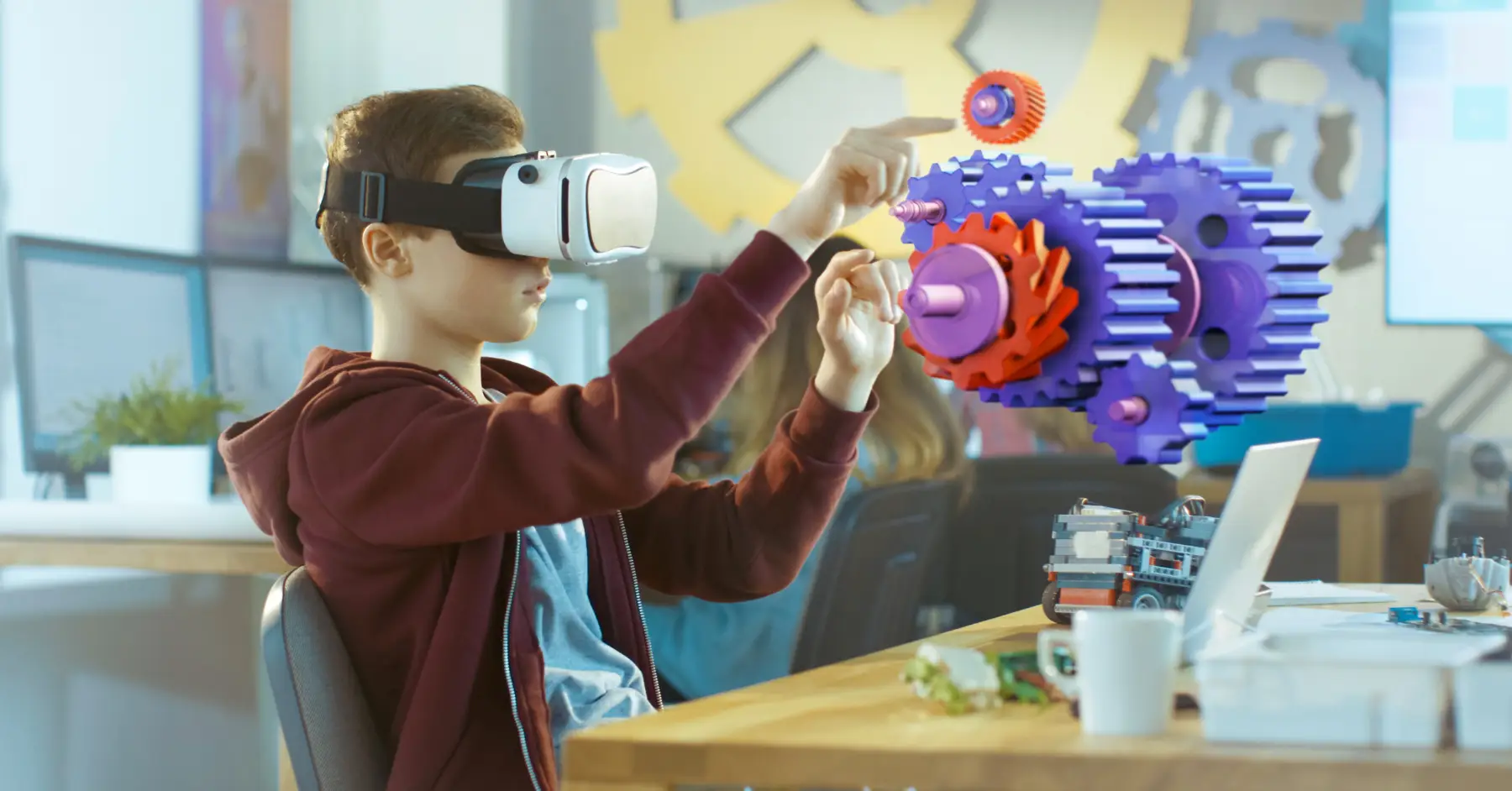
Augmented Reality (AR) is a technology that superimposes digital content, such as images, videos, and sounds, onto the physical world through devices like smartphones, tablets, and AR glasses. Unlike virtual reality, which immerses users in a completely virtual environment, AR enhances the real world by adding virtual elements. This mixed reality approach allows students to interact with both physical and digital objects, fostering a unique and engaging learning experience.
How AR in Education Enhances Learning Experiences
AR enhances learning experiences by providing interactive and immersive content that traditional classroom methods cannot offer. For example, students studying biology can use AR applications to visualize and manipulate 3D models of cells and organs. This hands-on approach helps students better understand complex concepts and retain information longer. Additionally, AR encourages active participation, collaboration, and critical thinking, making learning more enjoyable and effective.
What Types of AR Applications are Used in Educational Settings?
Several types of AR applications are used in educational settings to cater to different subjects and learning styles. Some popular AR apps include virtual lab simulations, interactive textbooks, educational games, and language learning tools. These applications use AR to create realistic simulations and interactive exercises that allow students to experiment, practice, and learn in a safe and controlled virtual environment. By incorporating AR technologies, educators can provide diverse and rich learning experiences that cater to the needs of all students.
What are the Benefits of Augmented Reality in Education?
How Does AR Improve Classroom Engagement?
AR significantly improves classroom engagement by making learning more dynamic and interactive. Traditional teaching methods often involve passive learning, where students passively receive information. In contrast, AR encourages active learning, where students interact with the content and take an active role in their education. This increased engagement not only makes learning more enjoyable but also enhances students’ understanding and retention of information.
What are the Educational Benefits of Using AR Applications?
Using AR applications in education offers numerous benefits, including improved visualization of complex concepts, increased motivation and interest in learning, and personalized learning experiences. AR allows students to visualize abstract concepts, such as mathematical equations or historical events, in a tangible and intuitive way. This visual approach helps students grasp difficult subjects more easily and fosters a deeper understanding of the material. Additionally, AR applications often include gamification elements, which motivate students to learn and achieve their goals.
How Can AR Enhance Professional and Military Training?
AR is not limited to traditional classroom settings; it also has significant potential for professional and military training. For instance, AR can be used in medical training to provide realistic simulations of surgeries and medical procedures, allowing trainees to practice and hone their skills in a risk-free environment. Similarly, military training programs can use AR to create realistic combat simulations and mission scenarios, enhancing the readiness and effectiveness of personnel. By providing immersive and practical training experiences, AR helps professionals and military personnel develop the skills and knowledge necessary for their fields.
What are Popular Use Cases of Augmented Reality in Education?
How Can AR Be Used for Field Trips and Virtual Tours?
AR can revolutionize field trips and virtual tours by providing immersive educational experiences without the need for physical travel. For example, students can use AR apps to take virtual field trips to historical sites, museums, and even other countries. These AR-enhanced experiences allow students to explore and learn about different cultures, historical events, and scientific phenomena in an engaging and interactive way. By incorporating AR into field trips, educators can provide enriching experiences that expand students’ horizons and deepen their understanding of the world.
Can AR Revolutionize Science and Mathematics Education?
AR has the potential to revolutionize science and mathematics education by making abstract and complex concepts more accessible and understandable. In science classes, students can use AR to explore detailed 3D models of molecules, cells, and ecosystems, enhancing their understanding of biological and chemical processes. In mathematics, AR can help students visualize geometric shapes, algebraic equations, and statistical data through interactive and dynamic representations. By providing tangible and visual aids, AR helps students grasp difficult concepts and develop a stronger foundation in STEM subjects.
What are Examples of Augmented Reality in Modern Classrooms?
Modern classrooms are increasingly adopting AR to enhance teaching and learning. One example of augmented reality in the classroom is the use of interactive AR textbooks that bring static images and text to life with animations, videos, and 3D models. Another example is the use of AR-enabled educational games that combine learning with play, making subjects like history and geography more enjoyable. Additionally, AR apps that provide step-by-step guides and tutorials for subjects like art and engineering are being used to support hands-on learning and creative expression.
What are the Challenges and Solutions in Using Augmented Reality in the Classroom?
What are the Technical Challenges in Incorporating AR?
Incorporating AR in the classroom presents several technical challenges, including the need for compatible hardware and software, reliable internet connectivity, and the integration of AR content with existing educational resources. Ensuring that all students have access to AR-enabled devices and that these devices are capable of running AR applications smoothly is crucial. To overcome these challenges, schools can invest in high-quality AR tools and infrastructure, provide technical support, and ensure that teachers are trained to use AR effectively.
How Can Schools Overcome Budget Constraints?
Budget constraints are a significant hurdle for many schools looking to implement AR in education. To overcome this challenge, schools can seek funding from external sources such as grants, sponsorships, and government funding programs. Additionally, partnering with tech companies and educational organizations can provide access to affordable or free AR tools and resources. By exploring creative funding solutions and prioritizing cost-effective AR applications, schools can make the benefits of AR accessible to all students.
What Training is Required for Teachers to Use AR Effectively?
Effective use of AR in education requires teachers to have a thorough understanding of AR technologies and how to integrate them into their teaching practices. Comprehensive training programs that cover the technical aspects of AR, best practices for incorporating AR into lessons, and strategies for engaging students with AR content are essential. Professional development workshops, online courses, and collaborative learning communities can help teachers build the skills and confidence needed to use AR effectively in their classrooms.
How Can Schools and Educational Institutions Implement Augmented Reality?
What Steps are Involved in Choosing the Right AR Tools?
Choosing the right AR tools involves several key steps, including assessing the specific needs of the school or educational institution, researching available AR applications, and evaluating the compatibility and scalability of AR technologies. Schools should consider factors such as curriculum alignment, ease of use, and the potential for student engagement when selecting AR tools. Additionally, gathering feedback from teachers and students can help identify the most effective and user-friendly AR solutions.
How to Integrate AR Content into Existing Curriculums?
Integrating AR content into existing curriculums requires careful planning and collaboration between educators, technology specialists, and curriculum developers. Educators should identify opportunities where AR can enhance existing lessons and create supplemental AR materials that align with learning objectives. Collaborative planning sessions and pilot programs can help ensure a smooth integration of AR content and provide valuable insights into its impact on student learning.
What are the Best Practices for Ensuring Successful AR Implementation?
Successful AR implementation requires adopting best practices such as setting clear goals, providing ongoing support and training, and continuously evaluating and refining AR applications. Schools should establish clear objectives for how AR will enhance learning and create a detailed implementation plan that includes timelines, resources, and assessment measures. Providing continuous professional development and technical support for teachers ensures they have the skills and confidence to use AR effectively. Regularly evaluating the impact of AR on student learning and making necessary adjustments helps ensure the long-term success of AR initiatives.