
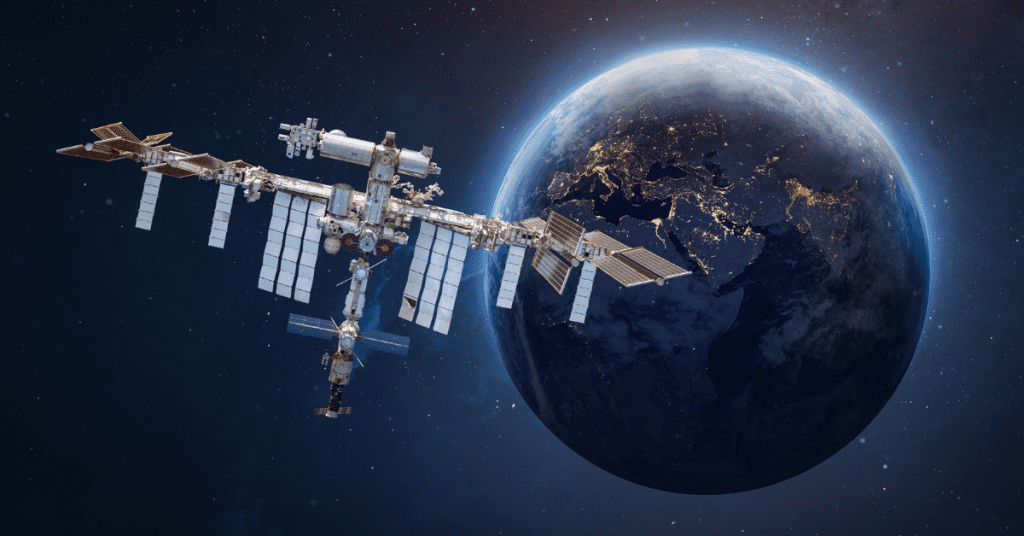

The International Space Station (ISS) serves as a unique laboratory for scientific research and technological development. NASA’s commitment to ISS research has facilitated numerous advancements that benefit humanity in various ways. From innovative scientific discoveries to groundbreaking technology demonstrations, the ISS continues to push the boundaries of what is possible in space exploration and research.
What is the ISS and its Role in Space Station Research?
Overview of the International Space Station
The International Space Station is a habitable artificial satellite that orbits Earth at an average altitude of approximately 400 kilometers. This joint venture involves multiple space agencies, including NASA, the European Space Agency (ESA), the Japan Aerospace Exploration Agency (JAXA), and others. The ISS serves not only as a home for astronauts but also as a comprehensive research facility where a variety of scientific experiments are conducted in the unique environment of microgravity. Since its launch, the ISS has been instrumental in advancing our understanding of space and Earth science, becoming an indispensable asset for long-duration space missions.
The Role of NASA and International Partners
The National Aeronautics and Space Administration (NASA) plays a crucial role in managing and operating the ISS, collaborating closely with international partners. NASA astronaut crews, alongside their counterparts from ESA, JAXA, and other agencies, carry out a myriad of experiments aimed at enhancing our knowledge and improving life on Earth. These collaborative efforts ensure that the ISS remains a hub for international cooperation in space research, fostering a spirit of unity and shared purpose among the global scientific community.
Key Facilities and Technologies on the ISS
The ISS is equipped with state-of-the-art laboratories and facilities that support a wide range of scientific disciplines. Key research modules include the U.S. Destiny Laboratory, the European Columbus Laboratory, and the Japanese Kibo Laboratory. These facilities house advanced technologies such as the Materials International Space Station Experiment (MISSE), which evaluates the durability of materials exposed to the harsh space environment. Other significant technologies include the Alpha Magnetic Spectrometer, which studies cosmic rays, and the Cold Atom Lab, which investigates the behavior of atoms in microgravity. These facilities enable researchers to conduct experiments that are not possible on Earth, opening new frontiers in scientific research.
How Does ISS National Lab Facilitate Research and Technology?
Understanding the ISS National Laboratory
The ISS National Laboratory, also known as the ISS National Lab, is a critical component of the space station’s research ecosystem. Managed by the Center for the Advancement of Science in Space (CASIS), the ISS National Lab provides a platform for scientific research and technology development. Its mission is to maximize the use of the ISS for the benefit of humanity, focusing on areas such as life sciences, physical sciences, and Earth and space science. By leveraging the unique conditions of microgravity, the ISS National Lab supports experiments that lead to new scientific insights and technological innovations.
Research Opportunities and Solicitations
The ISS National Lab offers numerous research opportunities for scientists and organizations worldwide. Through various solicitations and funding opportunities, researchers can propose experiments that utilize the unique environment of the ISS. These opportunities are open to both public and private sectors, enabling a diverse range of studies to be conducted in space. From studying the effects of microgravity on biological systems to developing new materials and technologies, the ISS National Lab provides a valuable platform for groundbreaking research.
Partnerships with Private and Public Sectors
The ISS National Lab fosters partnerships with both private companies and public institutions to advance research and technology. Collaborations with industry leaders such as SpaceX and Boeing, as well as academic institutions, have led to significant advancements in various fields. These partnerships enable the transfer of knowledge and technology from space research to practical applications on Earth. By working together, the public and private sectors can leverage the unique capabilities of the ISS to drive innovation and address global challenges.
What are the Benefits of ISS Research for Humanity?
Scientific Discoveries and Innovations
ISS research has led to numerous scientific discoveries and innovations that have a profound impact on our understanding of the universe. Experiments conducted in microgravity have provided new insights into fundamental processes such as fluid dynamics, combustion, and material properties. These discoveries have the potential to revolutionize various industries, from manufacturing to healthcare. For example, research on the ISS has contributed to the development of new medical treatments and therapies, improving the quality of life for people on Earth.
Applications of Microgravity Research
The unique conditions of microgravity on the ISS allow researchers to conduct experiments that are not possible on Earth. This has led to significant advancements in various fields, including pharmaceuticals, materials science, and biotechnology. For instance, microgravity research has enabled the development of new drug formulations and delivery systems that are more effective and efficient. Additionally, studies on the ISS have contributed to the creation of stronger and lighter materials that have applications in aerospace, construction, and other industries.
Long-Term Impact on Life on Earth
The long-term impact of ISS research extends beyond scientific discoveries and technological innovations. The knowledge gained from ISS experiments contributes to our understanding of fundamental biological and physical processes, which can lead to improvements in various aspects of life on Earth. For example, research on the ISS has provided valuable insights into the effects of long-duration spaceflight on the human body, which can inform the development of countermeasures for astronauts and improve healthcare for people on Earth. Moreover, the collaborative nature of ISS research fosters international cooperation and inspires future generations of scientists and engineers to pursue careers in space exploration and research.
What are Some Notable ISS Research Projects?
Physical Science Experiments
Physical science experiments on the ISS have contributed to our understanding of fundamental processes and phenomena. One notable project is the study of fluid dynamics in microgravity, which has provided new insights into how fluids behave in the absence of gravity. This research has applications in various industries, including oil and gas, where understanding fluid behavior can lead to more efficient extraction and processing techniques. Other significant physical science experiments include studies on combustion, material properties, and the behavior of colloids in microgravity.
Biological and Medical Research
Biological and medical research on the ISS has led to significant advancements in our understanding of human health and disease. Experiments on the ISS have provided valuable insights into how the human body responds to long-duration spaceflight, including changes in bone density, muscle mass, and cardiovascular function. This research has applications in developing countermeasures for astronauts and improving healthcare on Earth. Additionally, studies on the ISS have contributed to the development of new medical treatments and therapies, including drug formulations and delivery systems that are more effective and efficient.
Technological Advancements and Demonstrations
The ISS serves as a platform for demonstrating new technologies and advancing our understanding of how these technologies perform in the space environment. Notable technological advancements include the development of advanced life support systems, robotics, and spacecraft technologies. For example, the ISS has served as a testbed for autonomous robotic systems that can perform maintenance and repair tasks in space. These technologies have applications in future space missions, as well as in various industries on Earth. Additionally, the ISS has contributed to the development of new spacecraft technologies, such as advanced propulsion systems and radiation shielding, which are essential for long-duration space missions.
What Does the Future Hold for ISS Research and Technology?
Upcoming Projects and Missions in 2024
The future of ISS research and technology looks promising, with numerous exciting projects and missions planned for 2024 and beyond. Upcoming missions include the launch of new research payloads and the continuation of long-duration experiments that aim to address critical questions about human health, materials science, and space exploration. These missions will expand our understanding of the space environment and contribute to the development of new technologies and innovations that have applications both in space and on Earth.
The Role of JAXA and the European Space Agency
International partners such as the Japan Aerospace Exploration Agency (JAXA) and the European Space Agency (ESA) play a crucial role in advancing ISS research and technology. JAXA’s contributions include the development of advanced research facilities, such as the Kibo Laboratory, and conducting experiments that focus on various scientific disciplines, including life sciences and materials science. Similarly, ESA’s involvement includes the operation of the Columbus Laboratory and the development of new research payloads and technologies. These collaborations ensure that the ISS remains a hub for international scientific research and technological development.
Future Research Opportunities and Collaborations
The future of ISS research and technology is bright, with numerous opportunities for collaboration and innovation. The ISS National Lab will continue to offer research opportunities and solicitations for scientists and organizations worldwide, enabling a diverse range of studies to be conducted in space. Additionally, partnerships with private companies and public institutions will drive innovation and address global challenges. Future research on the ISS will focus on areas such as long-duration spaceflight, advanced materials, and biotechnology, contributing to our understanding of the universe and improving life on Earth.
In conclusion, NASA’s ISS research has led to significant advancements in various fields, from scientific discoveries to technological innovations. The collaborative efforts of international partners, coupled with the unique environment of the ISS, ensure that space station research continues to benefit humanity and push the boundaries of what is possible. As we look to the future, the ISS will remain a vital platform for scientific research and technological development, paving the way for new discoveries and innovations that will shape the future of space exploration and improve life on Earth.